Know Your Jeep Before Choosing a Trail
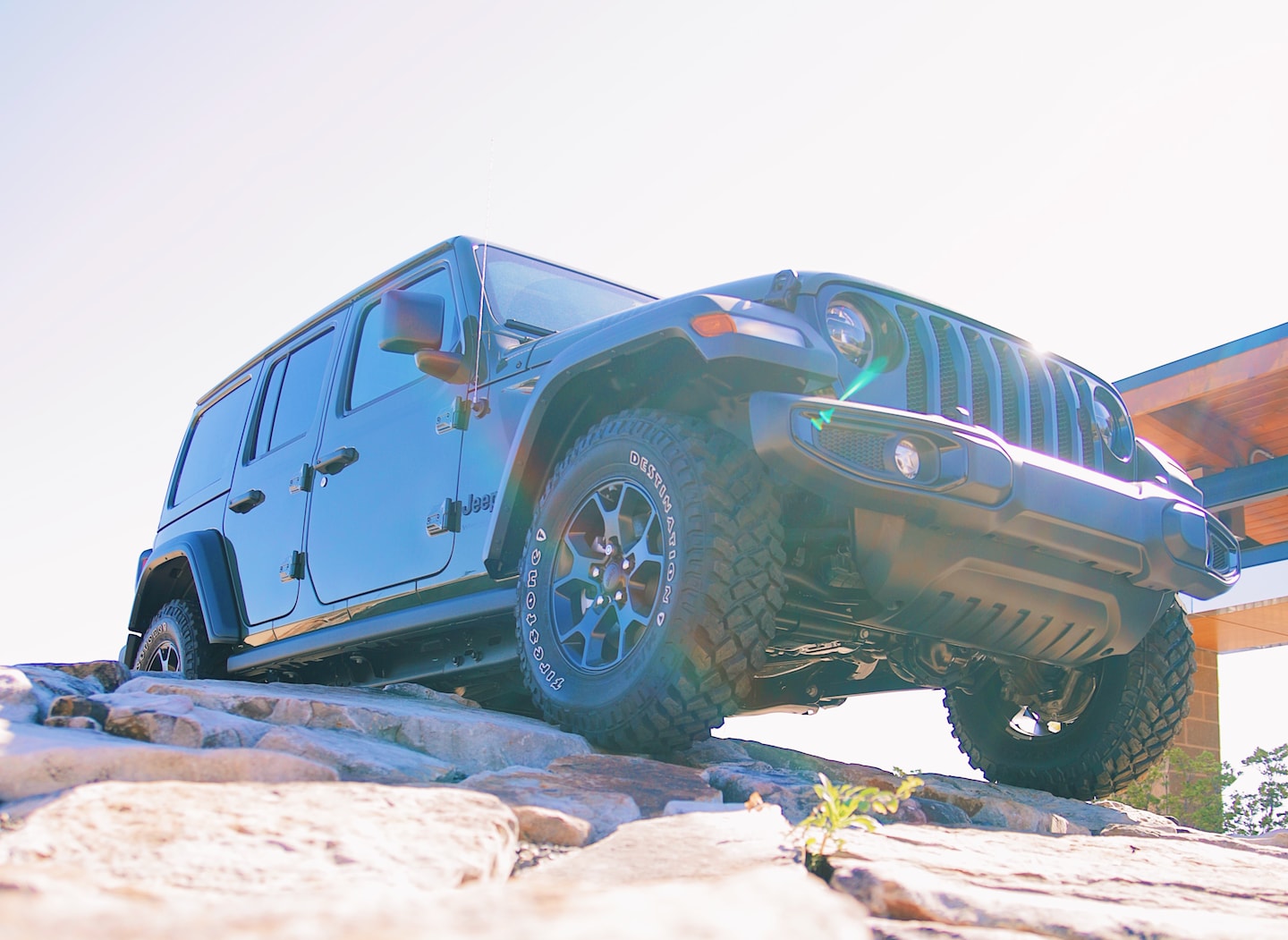
Jeep models don't all have the same drivetrain, tires, or off-road features. Even two vehicles with the same model badge can have different equipment because their trims and options differ.
The Wrangler offers 4x4 configurations with Command-Trac, Selec-Trac, or Rock-Trac 4WD systems, depending on trim and options. The Compass uses a different terrain-management approach. If your vehicle has 4H, check the owner's manual to learn when that setting is appropriate. Those differences matter when you're learning the controls.
Ground clearance and suspension articulation affect how a vehicle handles uneven terrain. Suspension articulation allows wheels to move over obstacles and can help maintain tire contact, but it doesn't guarantee traction.
Start by learning the switches, dashboard indicators, and displays in your own vehicle. Locate your 4WD controls, including 4H if equipped, and learn what each setting does. You should recognize their normal behavior before concentrating on an unfamiliar trail.
The Wrangler and Gladiator both offer Rubicon trims, but a trim badge isn't a substitute for driving experience. Identify your vehicle's rated recovery points, then confirm those recovery points are accessible. Learn which compatible recovery gear you have and how to use it safely. Our team of CDJR specialists is here to help you learn about your Jeep and understand its equipment. That foundation makes your first outing less distracting.
Make Tire Care Part of Your Off-Road Routine
Tires deserve attention before every trip, including the pavement miles between home and the trail. Pressure and tread condition belong in the same conversation.
Check pressure while the tires are cold
Take pressure readings while your tires are cold, especially after a large temperature swing. Driving warms the tires, so a reading taken immediately after a trip gives you different information.
A reliable gauge makes this a simple ownership habit. Record cold readings and compare them with the pressure guidance for your specific vehicle and tires.
Before off-roading, check tires for cuts, punctures, and worn tread. For some trail conditions, it may be appropriate to air down, but follow your vehicle and tire guidance. No single pressure fits every situation.
After the trail, inspect your tires again for damage. If you air down, restore the tires to the appropriate pressure before driving on pavement.