




A used truck can deliver years of dependable work, towing, commuting, and weekend use without the price of a brand-new model. The key is knowing how to judge more than the paint and mileage. A clean-looking pickup can still hide corrosion, overdue maintenance, or signs of hard use, while a truck with a few cosmetic flaws may have an excellent mechanical history. Before you choose a pre-owned truck in Greer, use this checklist to inspect the areas that matter and make the test drive count.
Used Truck Buying Checklist for Greer Drivers
Start with the truck you actually need
Before looking under the hood, define what the truck must do. Think about cab size, bed length, payload, towing needs, fuel economy, parking space, and whether you need two-wheel or four-wheel drive. If you plan to tow, do not judge capability by appearance or engine size alone. Confirm the specific truck's tow rating, payload rating, axle ratio, hitch equipment, and gross vehicle weight limits. These figures can vary by engine, cab, bed, drivetrain, and equipment package.
This first step keeps you from paying for capability you will never use or buying a truck that falls short once a trailer, passengers, and cargo are added. It also makes it easier for the Benson CDJR team to narrow the available pre-owned inventory to trucks that fit your daily routine and budget.
Check the body and frame for rust
Surface rust on an older truck is not automatically a dealbreaker, but location and severity matter. Walk around the truck in good daylight and look for bubbling paint, discoloration, rough edges, or mismatched paint. Pay close attention to the wheel arches, rocker panels below the doors, lower door seams, cab corners, tailgate, bed supports, and the area around the fuel door. Trucks that have spent time in regions that use road salt may deserve extra scrutiny even if they are now being sold in South Carolina.
Then look underneath without putting yourself under an unsupported vehicle. Use a flashlight to inspect visible frame rails, crossmembers, suspension mounting points, brake lines, fuel lines, the hitch receiver, and the spare-tire carrier. Light orange surface oxidation differs from heavy scaling, flaking metal, holes, swollen seams, or fresh coating applied over a rough surface. Structural corrosion should be evaluated by a qualified technician before purchase.
Look for signs of towing and heavy use
A pickup may have worked hard without being abused, especially when it was maintained correctly. Still, signs of frequent towing or hauling help you ask better questions. Inspect the hitch for heavy wear, bent parts, corrosion, or improvised wiring. Look into the bed for deep dents, cracked liners, damaged tie-downs, or wear that suggests repeated heavy loads. Check whether the truck sits level; a sagging rear end or uneven tire clearance can point to worn suspension parts or previous overloading.
Examine the tires as a set. Uneven wear across a tread, different tire sizes, sidewall cracking, or mismatched tires can signal deferred maintenance, alignment trouble, or suspension issues. Confirm that the tire type and load rating are appropriate for the truck and your intended use.
Inspect the fluids with the engine cool
Fluid condition offers clues, but it should be interpreted along with mileage and service records. With the truck parked on level ground and the engine cool, look for wet spots beneath it and residue around the engine, transmission, differential, transfer case, radiator, hoses, and power-steering components when applicable.
Engine oil should be at the proper level. Milky or foamy oil can indicate moisture or coolant contamination and needs professional evaluation.
Coolant should be visible at the correct level in the reservoir when the engine is cool. Rusty residue, an oily film, or an empty reservoir deserves attention. Never open a hot radiator cap.
Transmission fluid, when the vehicle provides an owner-serviceable dipstick, should be checked according to the manufacturer's procedure. A burnt odor, very dark fluid, or a low level can justify a closer inspection.
Brake fluid should sit between the marked levels. A low level may reflect worn brake components or a leak and should not be dismissed.
Differential and transfer-case fluids are harder to assess during a walkaround, so ask when they were last serviced, especially on a four-wheel-drive truck or one used for towing.
A recently cleaned engine bay is not proof of a problem, but it can make old leaks harder to identify. After the test drive, look again for fresh seepage or new spots beneath the truck.
Review the service and ownership history
Ask for the vehicle history report and available maintenance records. Compare the mileage and dates for oil changes, coolant service, transmission service, brake work, tire replacement, recalls, and major repairs. Consistent records are more useful than a single recent service. Check whether the truck has been registered in multiple states, used commercially, involved in a reported collision, or issued a branded title.
A history report is an important screening tool, but it may not contain every repair or incident. Match the report to the truck's physical condition and consider an independent pre-purchase inspection when you want another professional opinion. If you are considering a Certified Pre-Owned Chrysler, Dodge, Jeep, or Ram vehicle, ask the Benson CDJR team to explain the current certification inspection, warranty coverage, eligibility rules, and vehicle-specific documents.
Use a step-by-step test drive
Start the truck when the engine is cold if possible. Confirm that the warning lights illuminate during the initial check and then turn off as expected. Listen for prolonged rattles, knocking, squealing, or unusually loud exhaust noise. Test the heat, air conditioning, windows, locks, cameras, parking sensors, infotainment system, trailer-brake controller, four-wheel-drive settings, and other equipment while parked.
On the road, drive at neighborhood, city, and highway speeds when conditions allow. The engine should accelerate smoothly, and the transmission should shift without harsh slamming, excessive delay, or slipping. On a straight, level road, note whether the truck tracks straight. Listen for humming that changes with speed, clunks over bumps, steering vibration, or wind noise that may suggest a seal or body-alignment concern.
Apply the brakes gradually and then more firmly in a safe location. The pedal should feel consistent, and the truck should stop without pulling, grinding, or strong steering-wheel vibration. Make several turns and a slow, tight circle in both directions. If equipped, engage four-wheel drive only according to the owner's manual and on an appropriate surface. After driving, let the truck idle briefly, look for warning messages, check for unusual odors, and inspect again for leaks.
Compare the full ownership picture
The right used truck is the one that fits the job, checks out mechanically, and makes sense after insurance, fuel, tires, maintenance, taxes, and financing are considered. At Benson Chrysler Dodge Jeep Ram in Greer, shoppers can compare pre-owned trucks from Ram and other manufacturers, review available vehicle information, discuss financing options, and schedule a test drive. The dealership also offers online inventory tools, a payment calculator, trade-in resources, and CarFinder for shoppers who do not see the exact truck they need.
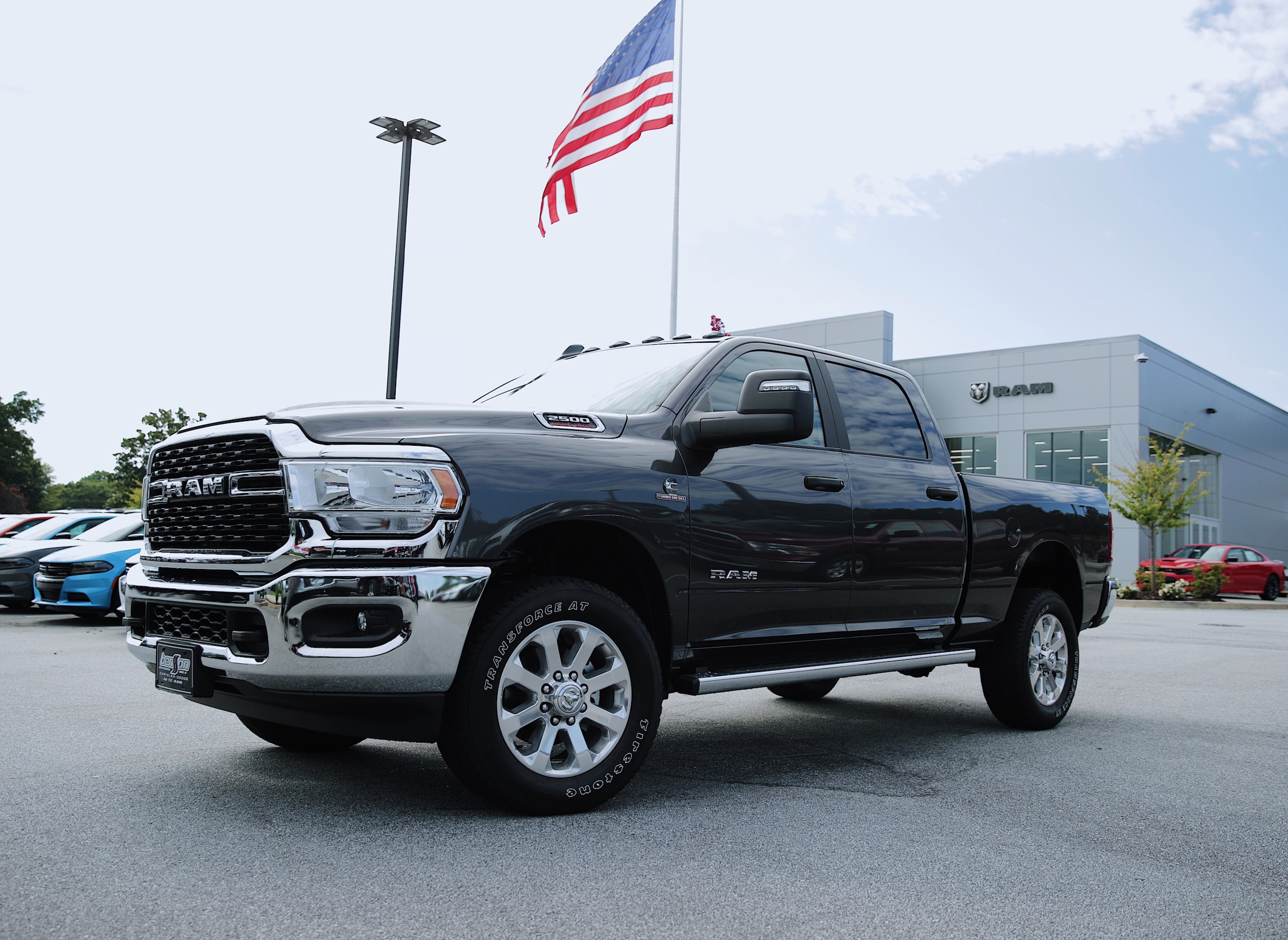
Browse the current pre-owned truck inventory online or visit Benson CDJR at 415 W Wade Hampton Boulevard in Greer. Bring this checklist, ask specific questions, and take enough time to evaluate the truck before deciding. A careful inspection today can help you choose a pickup that is ready for the way you plan to use it.